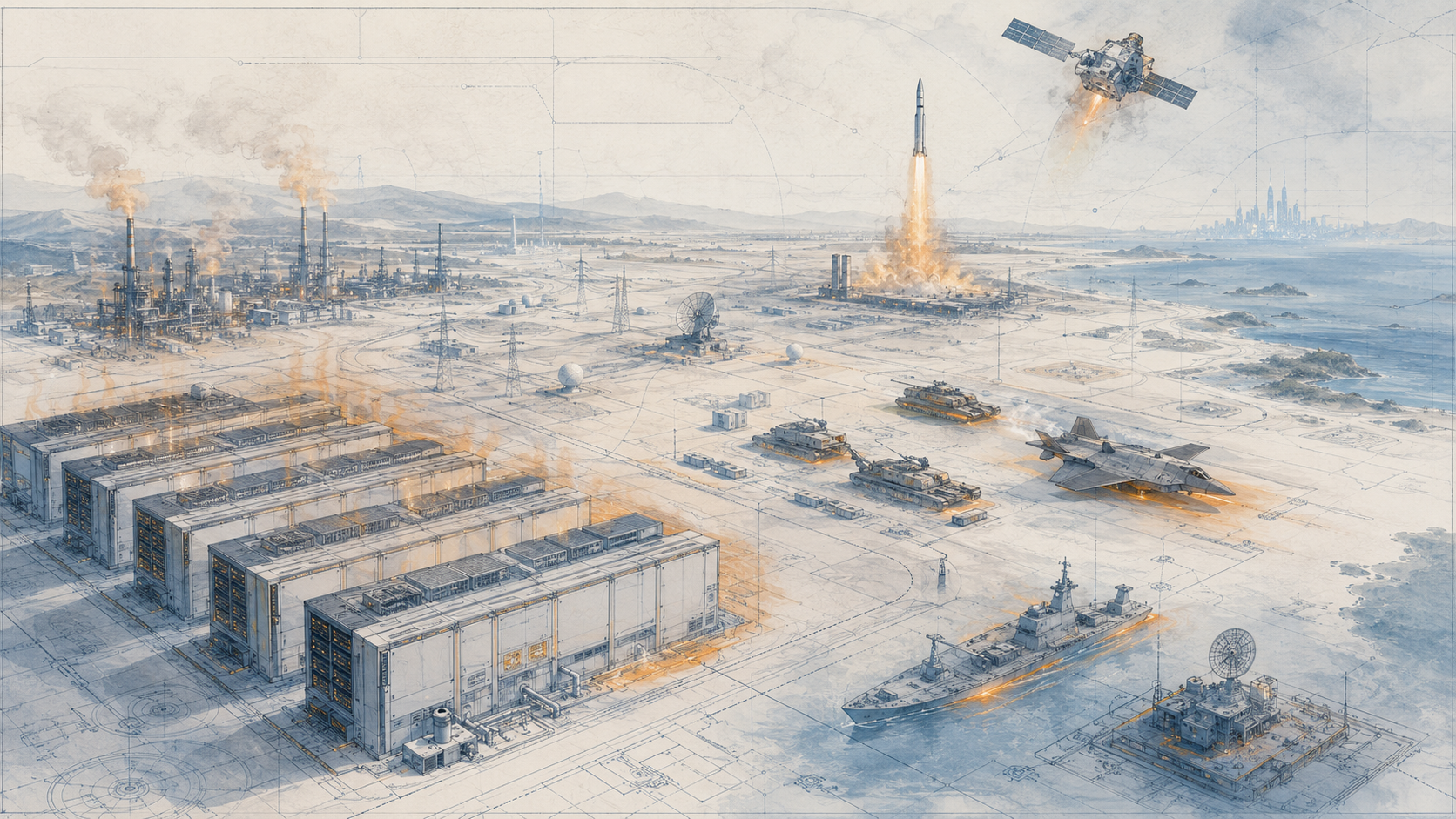
Before CryoFlux, the thermal domain was not ungovernable. It was simply ungoverned. Engines worked. Heat moved. Burden accumulated. Atmosphere intruded. The cold that could have governed it existed -- in the atmosphere, in the physics, in the natural law -- but no architecture had been built to deliver it with precision, close the loop, and return it renewed.
Data centers dissipate heat into ambient air at enormous cost. MRI systems require liquid helium at extraordinary expense and fragility. Defense platforms carry thermal signatures that compromise every operational advantage. Orbital systems reject heat into space with no recovery architecture. In every domain, the thermal burden is real, measurable, and expensive. In none of them was it governed.
The Ungoverned Domain is not a failure of engineering. It is an absence of architecture. The engineers knew the burden existed. They managed it. They did not govern it. Management accepts the burden. Governance eliminates it.
CryoFlux was not invented to improve thermal management. It was architected to replace it -- with a closed-loop, precision-delivered, telemetry-governed cold platform that treats thermal burden as a solvable system problem, not an unavoidable operating cost.
The domain was ungoverned, not ungovernable. That is the entire thesis.